Château d’Aguts
AGUTS , Tarn – Eredità culturale
Chi siamo
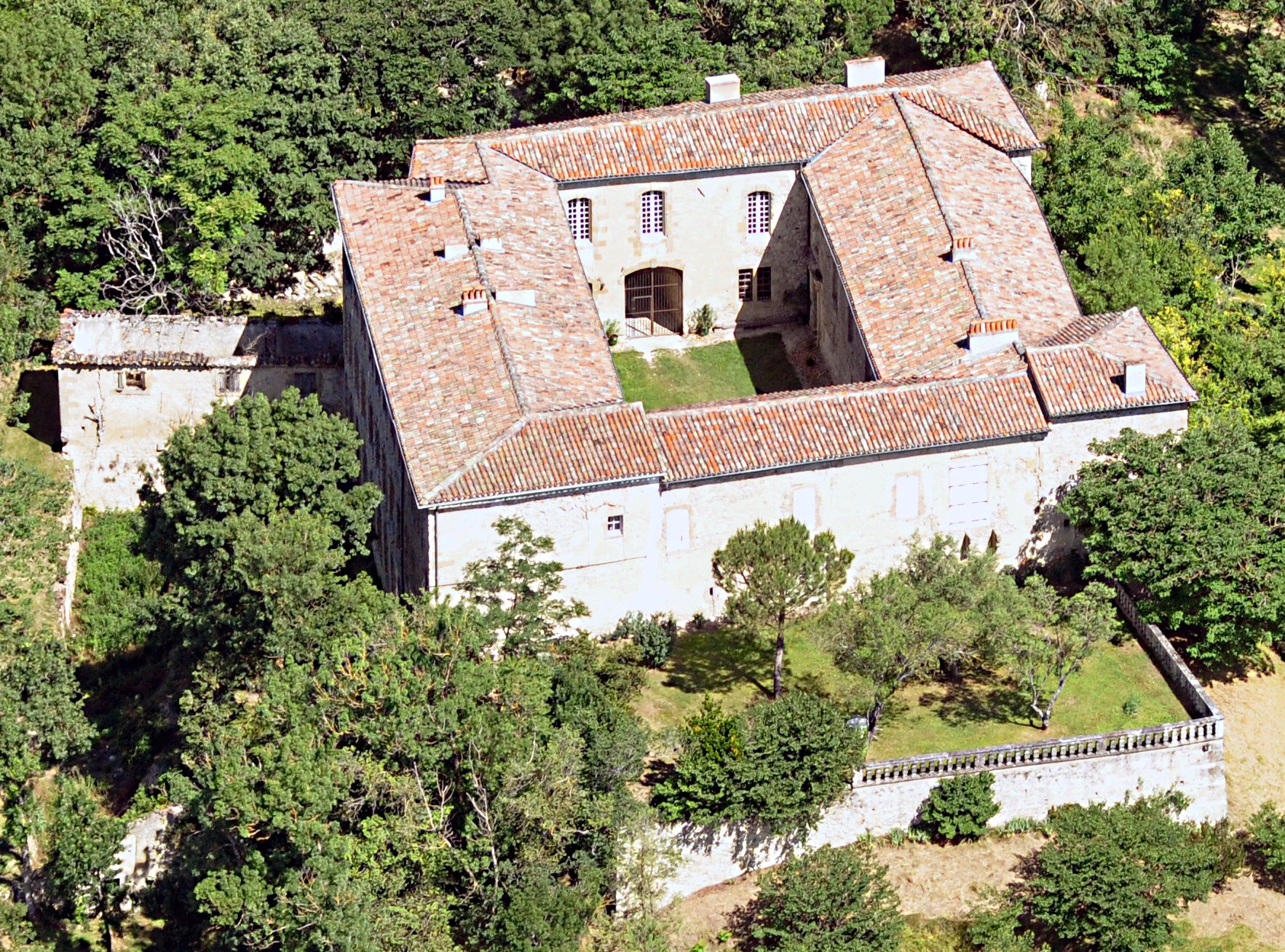
Una fortezza medievale, bruciata durante le guerre di religione. Un castello ristrutturato nel XVII e XVIII secolo. Apertura con mostra in occasione delle Giornate Europee del Patrimonio. Visite su appuntamento al numero 06 82 17 61 74 Traduction automatique par DeepL via DATAtourisme
A strategic stronghold since the construction of the bastide of Revel (1342), the Château d’Aguts is listed in the archives as a fief of Philippe Rigaud de Vaudreuil and his wife Marguerite de Bellassar in 1405. Along with Montgey and Cuq-Toulza, it forms part of a chain of fortresses tasked with guarding the Revel plain and the roads to Castres and Toulouse. From this period, it retains the medieval architecture of the ground floor of the north wing and, at the base of the south wing, a guardroom as well as a rare and curious “lantern of the dead.”
The castle remained in the possession of the Rigaud de Vaudreuil family, a very ancient and powerful family of the Lauragais, until the end of the 16th century; it was then sold—in the midst of the Wars of Religion—to the Davessens de Saint-Rome, the Protestant lords of Montesquieu-sur-Canal, whose town had just been conquered by the royal armies. Having in turn succumbed to Catholic forces, the fortress was transformed over the following centuries into a pleasure castle. Its terrace, with its admirable view of the Montagne Noire, dates specifically to the 17th century, while its elegant façade, featuring numerous windows, dates to the 18th century. Several confiscations ordered during the Revolution brought an end to its splendor; the château fell into gradual disrepair until it lay in ruins by the 20th century. Its restoration has since been carried out by the current owners. It was listed on the Supplementary Inventory of Historic Monuments (ISMH) in 1987.
Among the notable figures who have shaped the castle’s long history are Vital Rigaud de Vaudreuil and his wife Catherine de Lauzières in the early 16th century. The couple ruled over a large feudal estate comprising twenty-seven seigneuries; Vital played a role in the victory at Marignan and was knighted in 1515, while Catherine kept a journal that was still present in the castle’s library two centuries later. One of their descendants, Pierre Rigaud de Vaudreuil, served as governor of New France in the mid-18th century. Marc-Antoine Davessens de Saint-Rome, a representative of the nobility at the Estates-General of 1614, a distinguished captain of the Protestant forces during the Rohan Wars, and governor of the Colloque du Lauragais in 1621. Paul Davessens, Marquis de Saint-Rome, and Gabrielle Riquet de Bonrepos, great-granddaughter of the builder of the Canal du Midi. Paul represented the nobility at the Estates-General of 1789; he and his wife epitomized the resistance of the Ancien Régime to the birth of the modern world amid the turmoil of the Revolution. Two of their granddaughters left their mark on our era: Emilie de Villeneuve, founder of the Congregation of the Immaculate Conception (the “Blue Sisters” of Castres), canonized in 2015, and her sister Léontine de Villeneuve, celebrated by Chateaubriand in his *Mémoires d’outre-tombe* under the name “l’Occitanienne.” She herself recounted their literary exchanges, which spanned several years, in her memoirs.
Lingue parlate : Inglese – Francese
Benefici
Servizi
- Animali ammessi