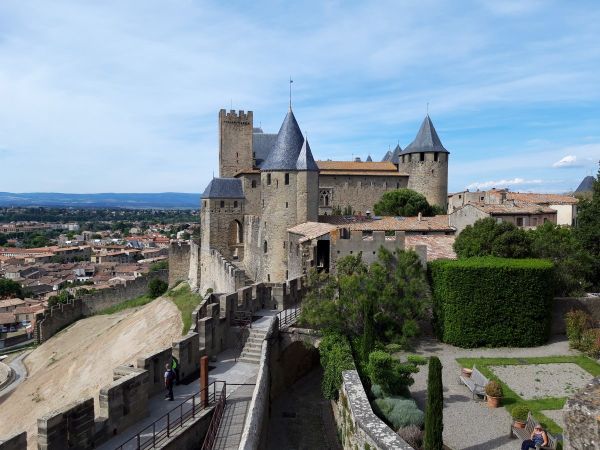


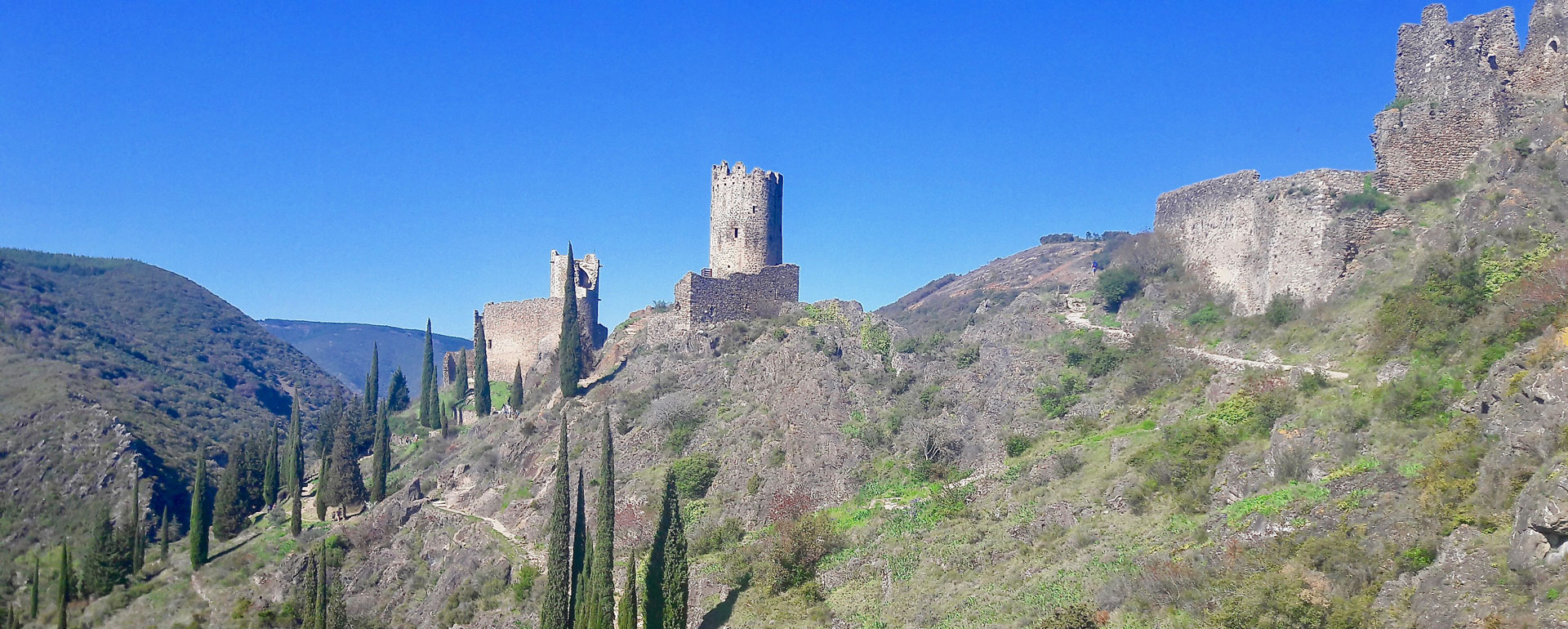
Spectacular witnesses to the major events that shaped the history of Languedoc, the fortresses of Aguilar, Carcassonne, Lastours, Montségur, Peyrepertuse, Puilaurens, Quéribus and Termes were inscribed on the UNESCO World Heritage List in July 2026. Together, they form a unique architectural and cultural landscape ensemble, towering above the rugged terrain of the Corbières, the Montagne Noire and the Pyrenean foothills. Embark on a captivating journey into the heart of a historic frontier, shaped by rock, wind and the enduring spirit of those who built and defended it.
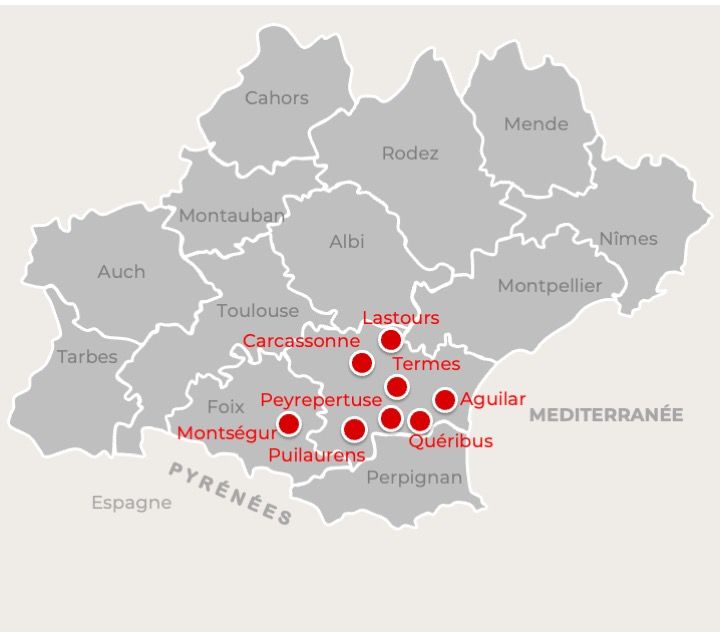
UNESCO has recognised the Outstanding Universal Value of the Royal Fortresses of Languedoc, a remarkable chain of fortified sites stretching across two departments of the Occitanie region: Aude and Ariège.
Built or extensively remodelled during the 13th century by the French Crown to secure the border with the Kingdom of Aragon, the Royal Fortresses of Languedoc were far more than isolated castles. Together, they formed a sophisticated defensive network designed to protect the new frontier of the Kingdom of France established by the Treaty of Corbeil in 1258.
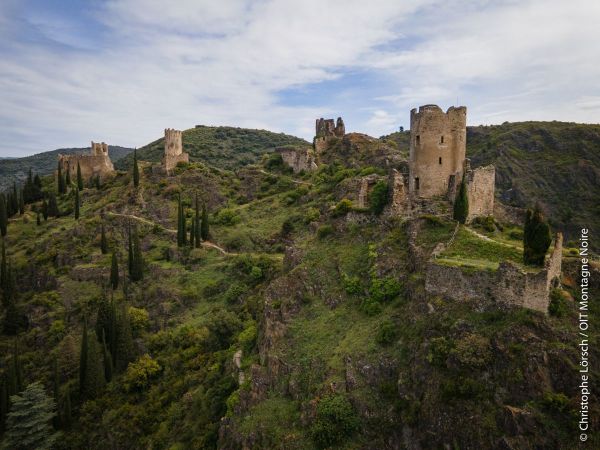
Designed in harmony with the rugged landscapes of the Corbières hills and the Pyrenees, these fortresses represent the pinnacle of medieval military architecture. Their watchtowers, crenellated ramparts and long-distance visual signalling system bear witness to exceptional engineering and military expertise, earning them a place among the world's UNESCO World Heritage Sites.
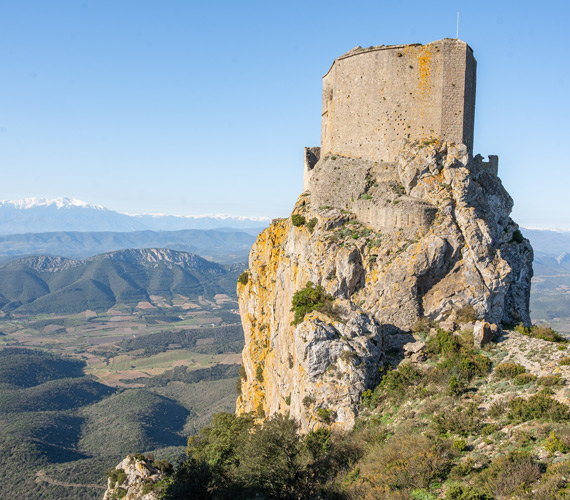
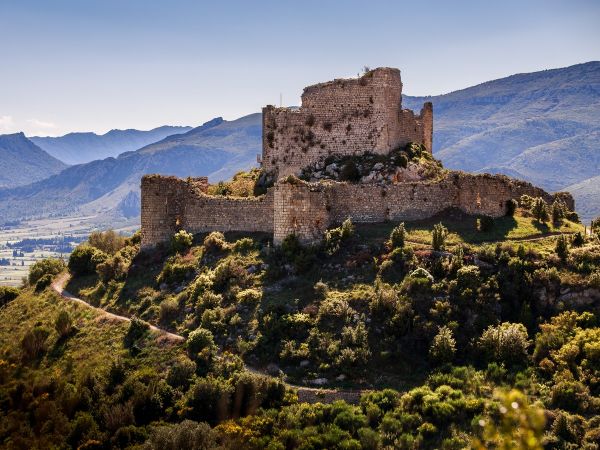
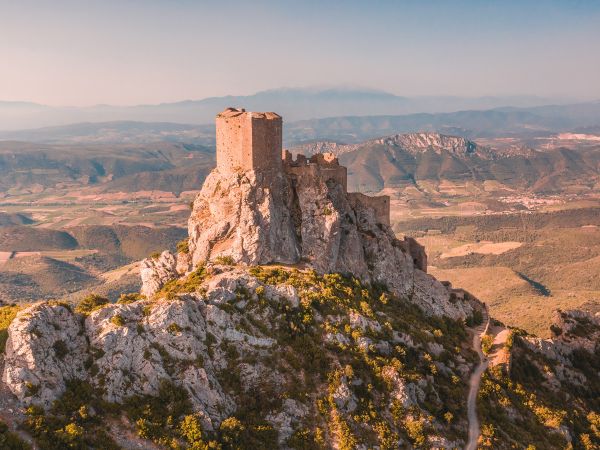
Quéribus
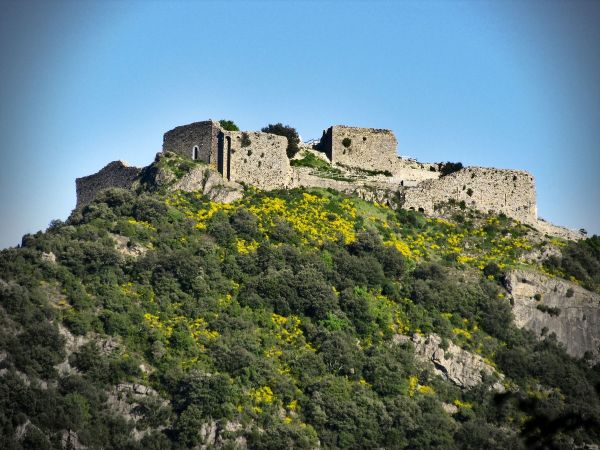
Each of the eight citadels inscribed by UNESCO offers a spectacular architectural and visual experience, where dramatic landscapes, royal ambition and medieval military ingenuity come together in perfect harmony.
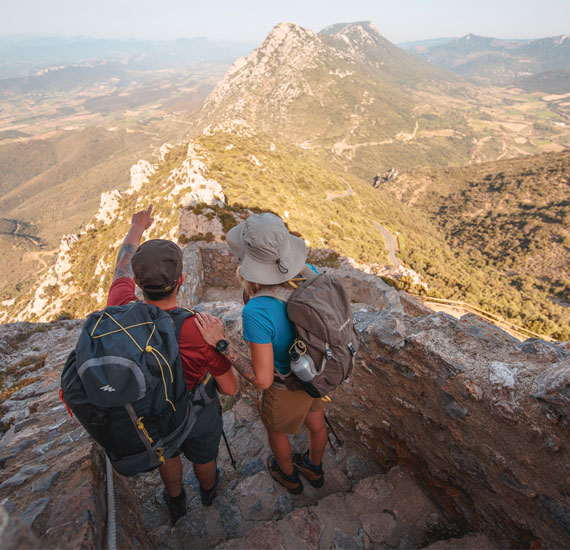
Visiting the Royal Fortresses of Languedoc takes a little effort. Rocky paths, steep slopes and winding mountain trails are all part of the experience, ... but the reward is unforgettable. Here, history comes alive in a spectacular open-air setting, where every stone tells a story shaped by the sun, the elements and the conflicts of the Middle Ages.
Drawn into the turmoil of the Albigensian Crusade and forever marked by the legacy of the Cathars, these strongholds later became the Crown of France's impregnable frontier fortresses. From the 13th century onwards, the Capetian monarchy transformed them into strategic bastions guarding the border with the Kingdom of Aragon.
Today, these remarkably preserved sites invite visitors to pause, reflect and marvel at landscapes of striking beauty and monuments steeped in centuries of history.
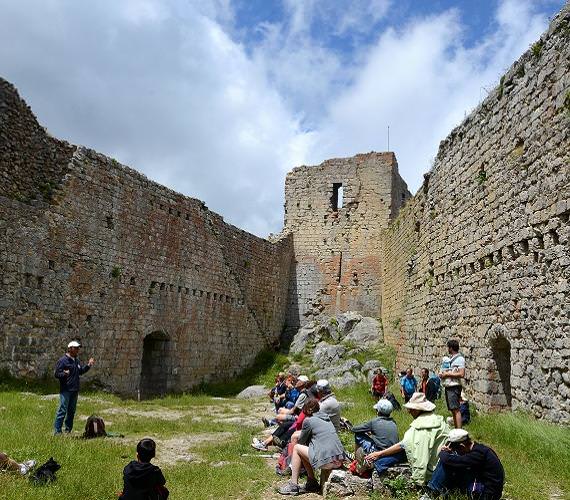
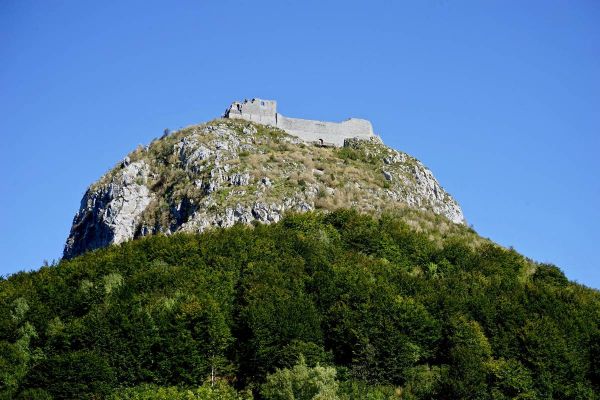
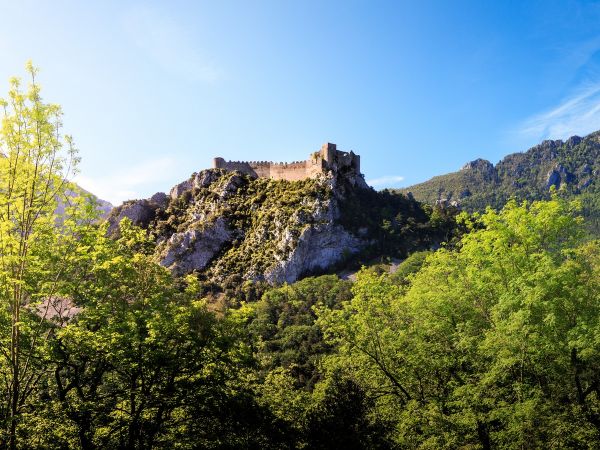
Castle of Montségur
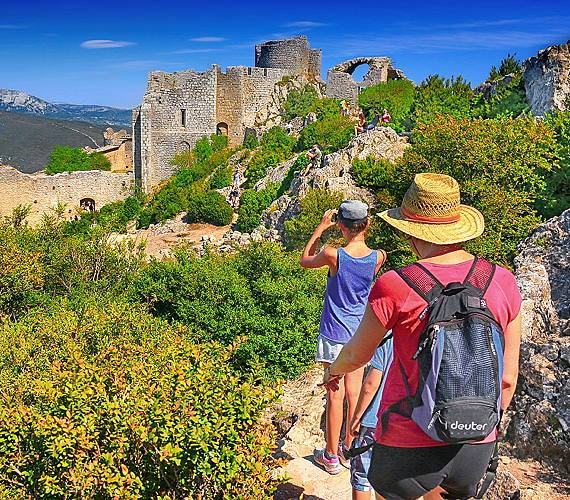
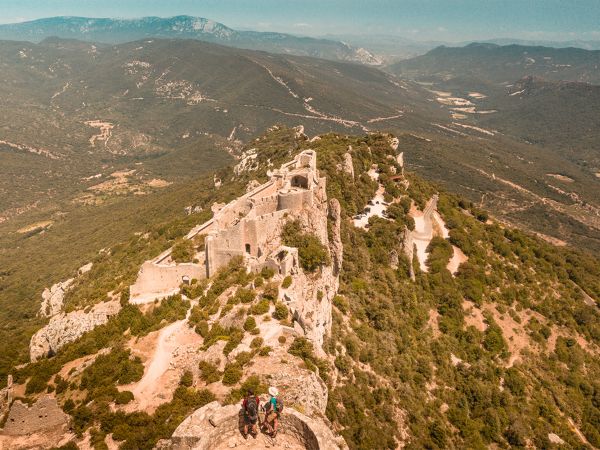
Château de Peyrepertuse - Aude - Occitanie, CRT Occitanie / G.Deschamps