La Ferme au Village – La Compagnie du Pastel
LAUTREC , Tarn – Handel & service
Over
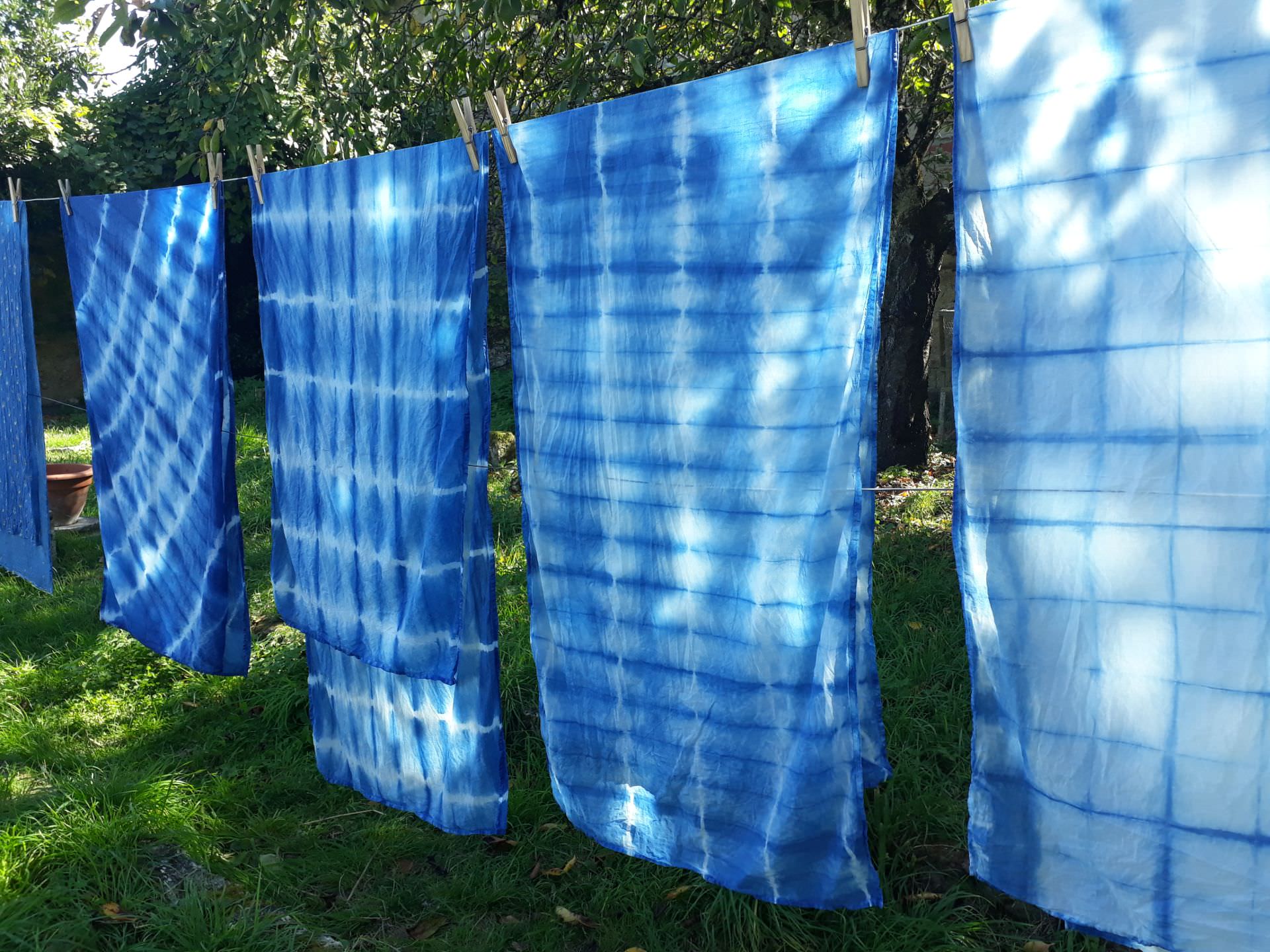
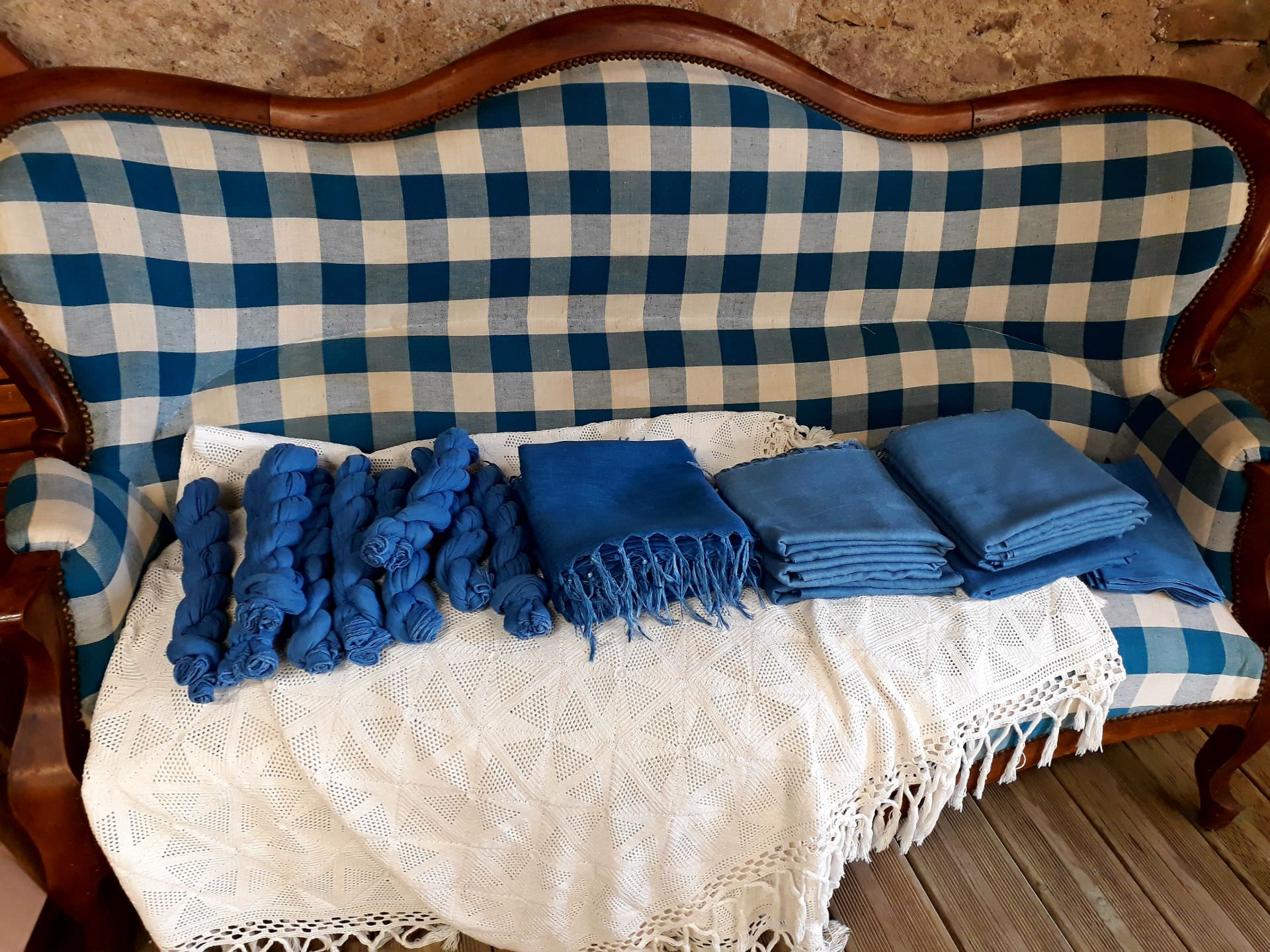
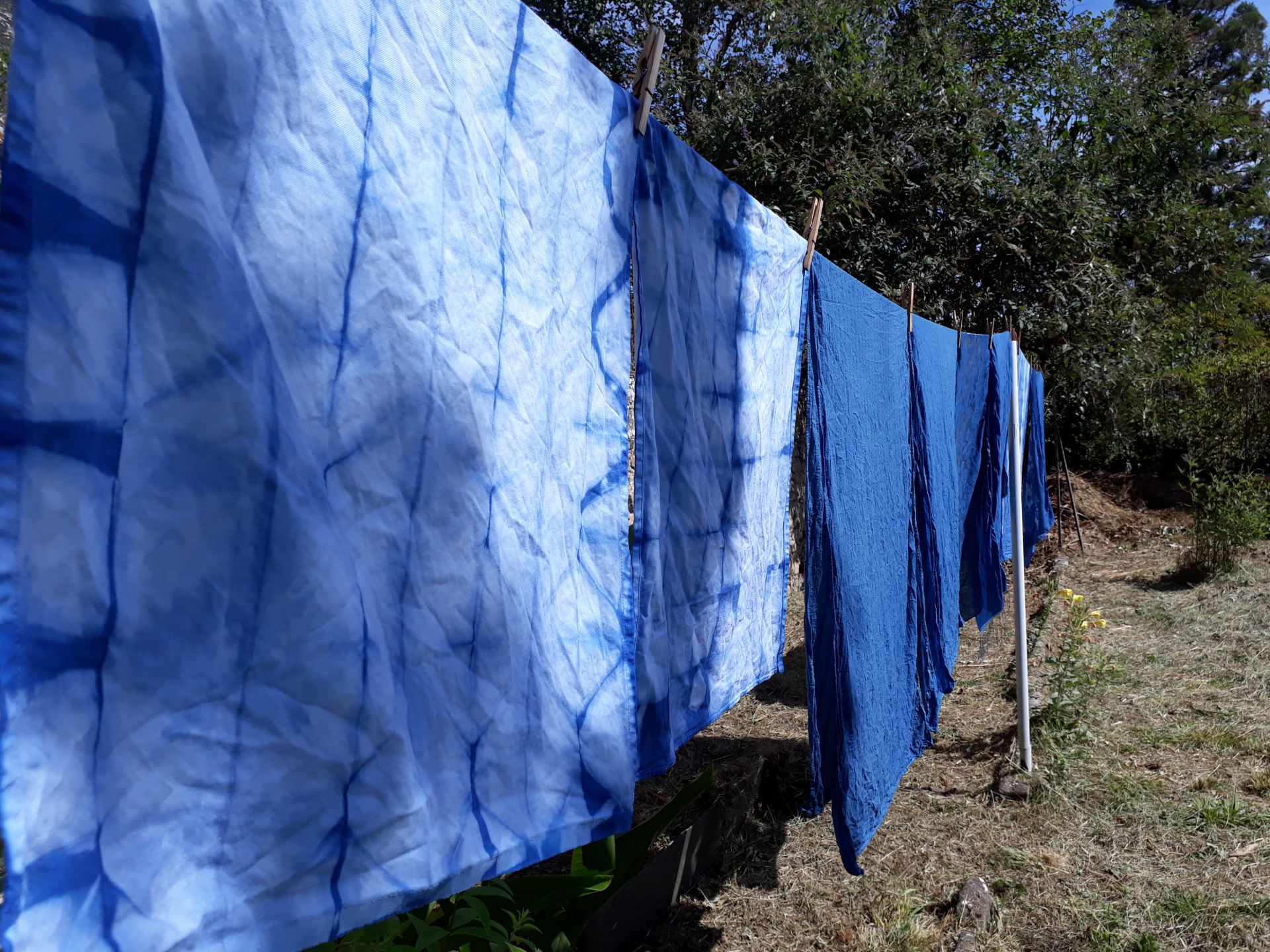
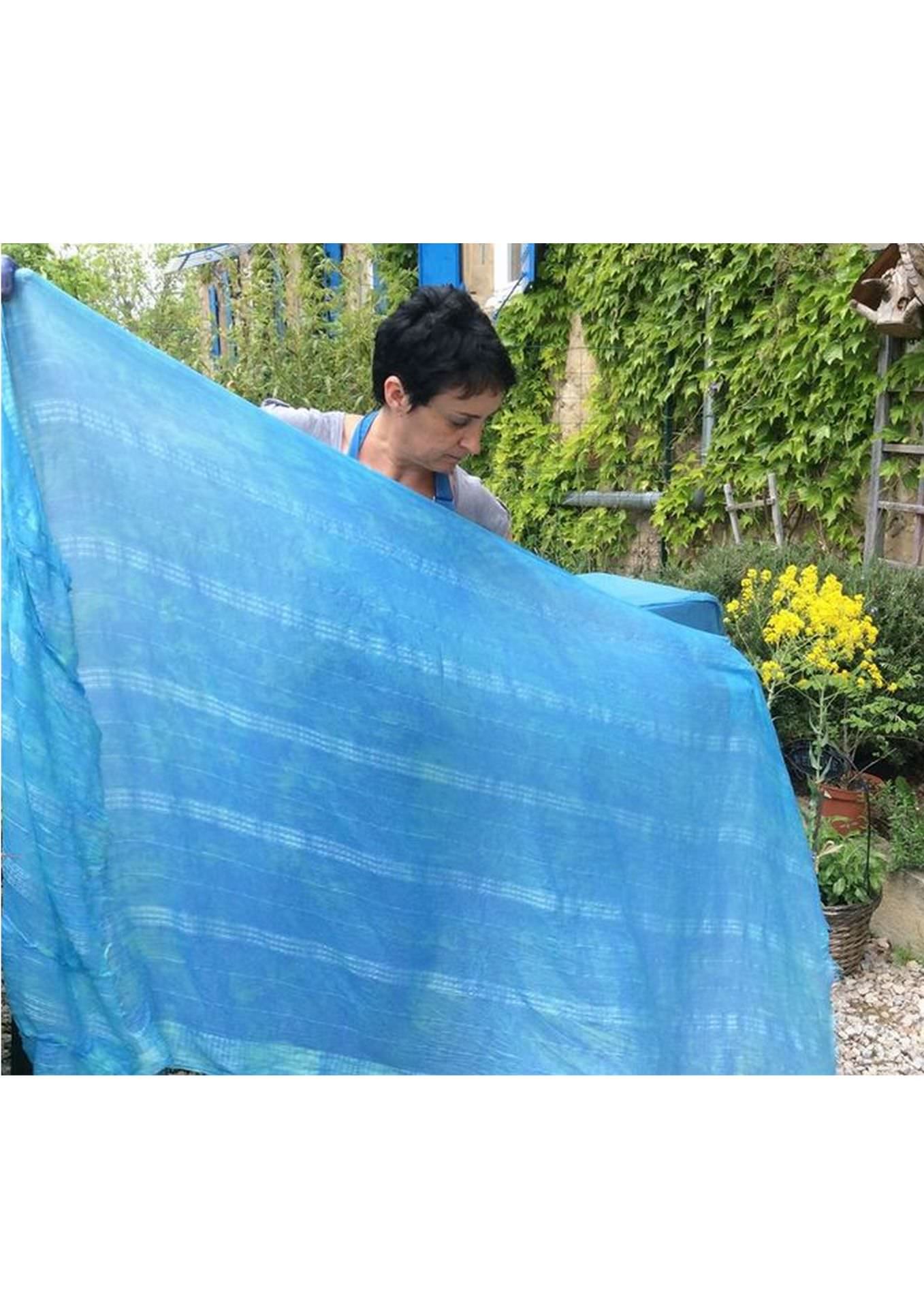
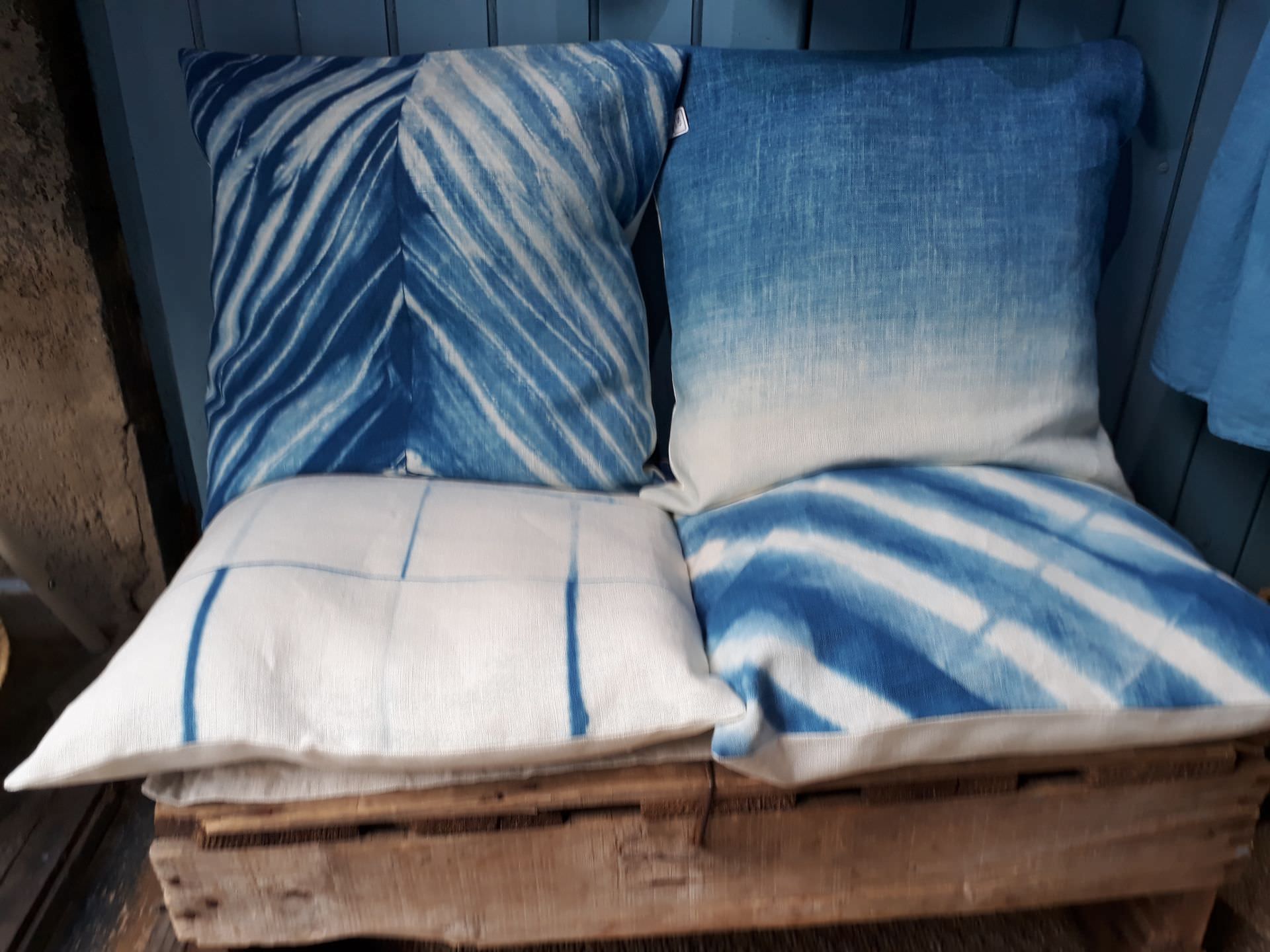
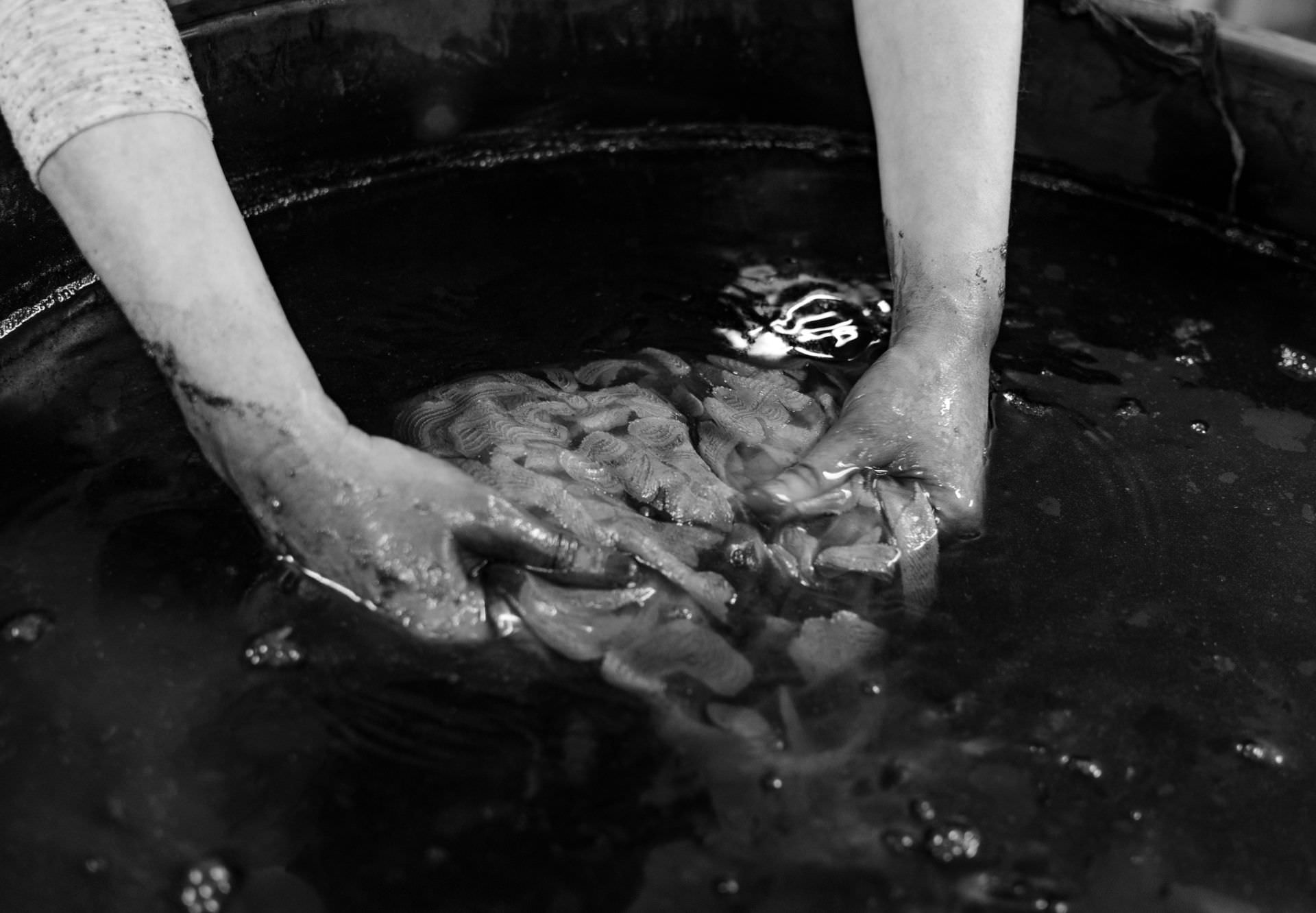
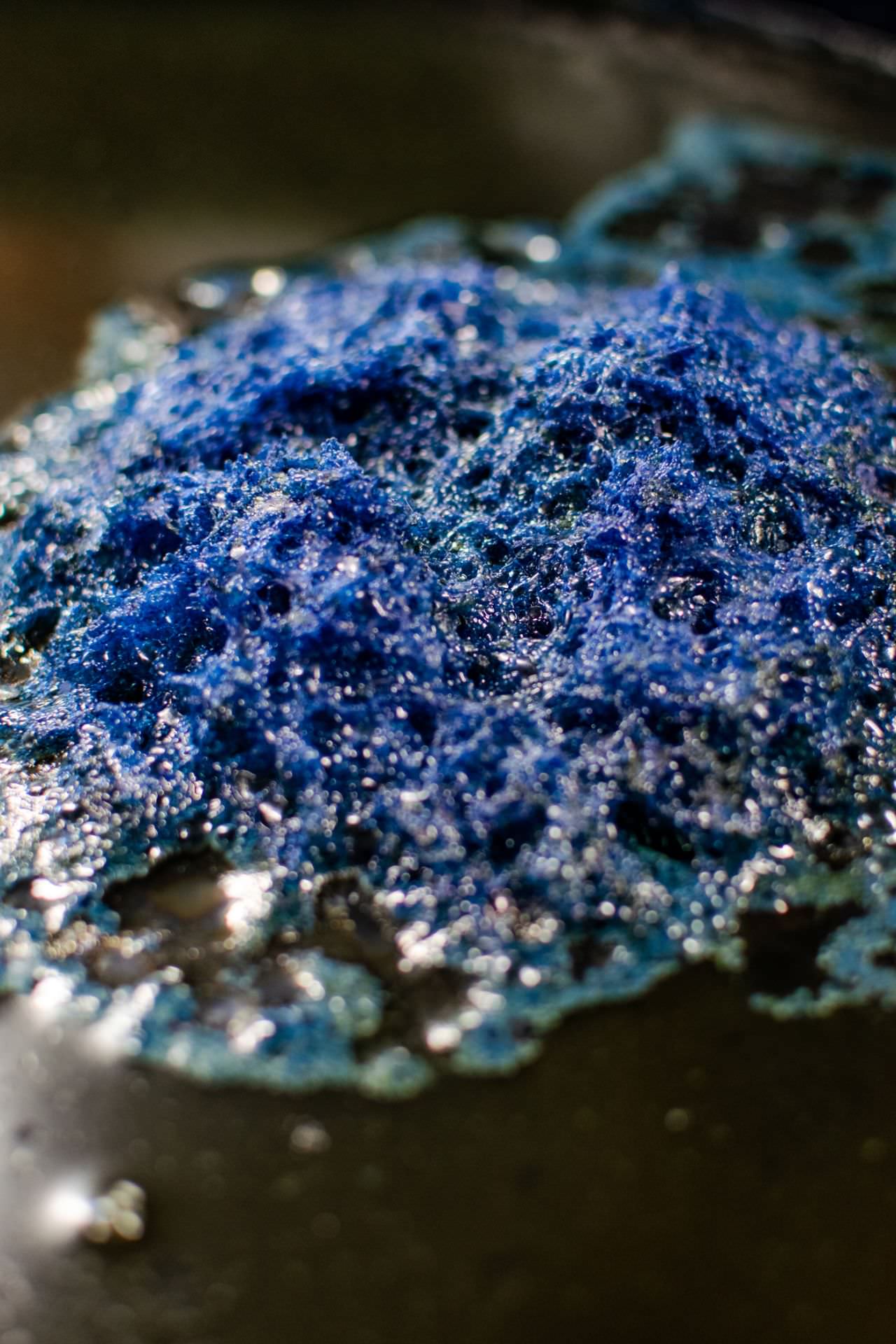
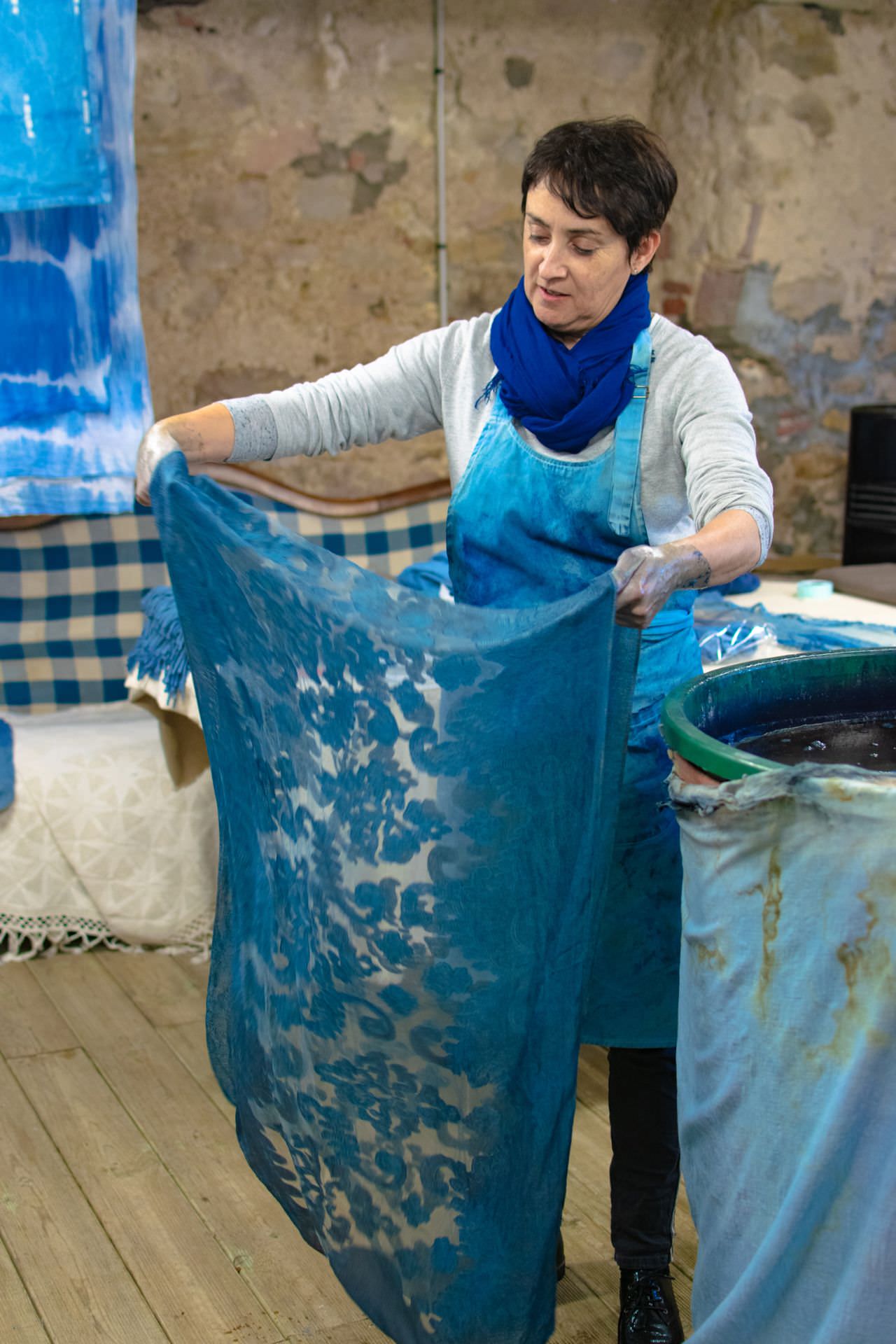
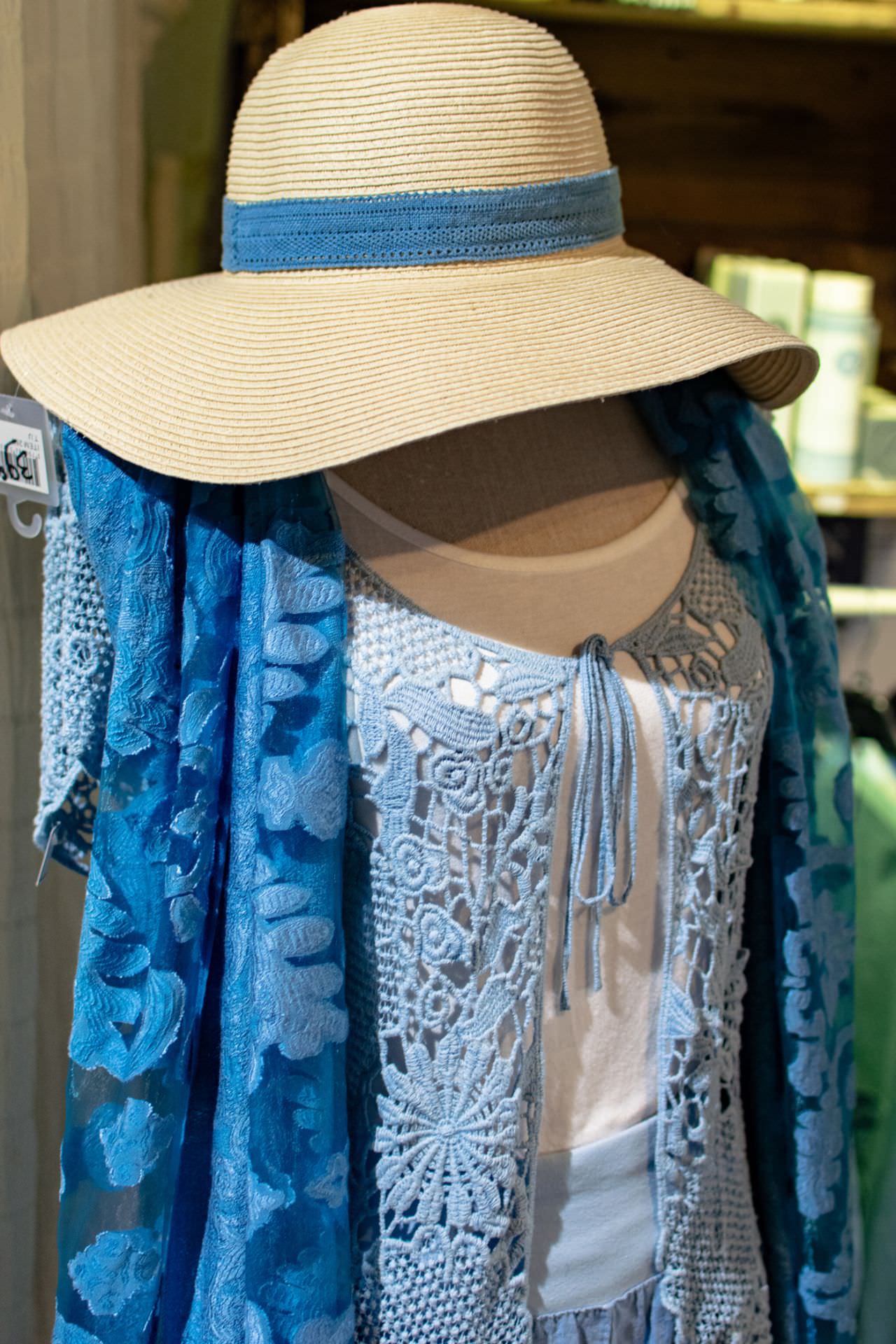
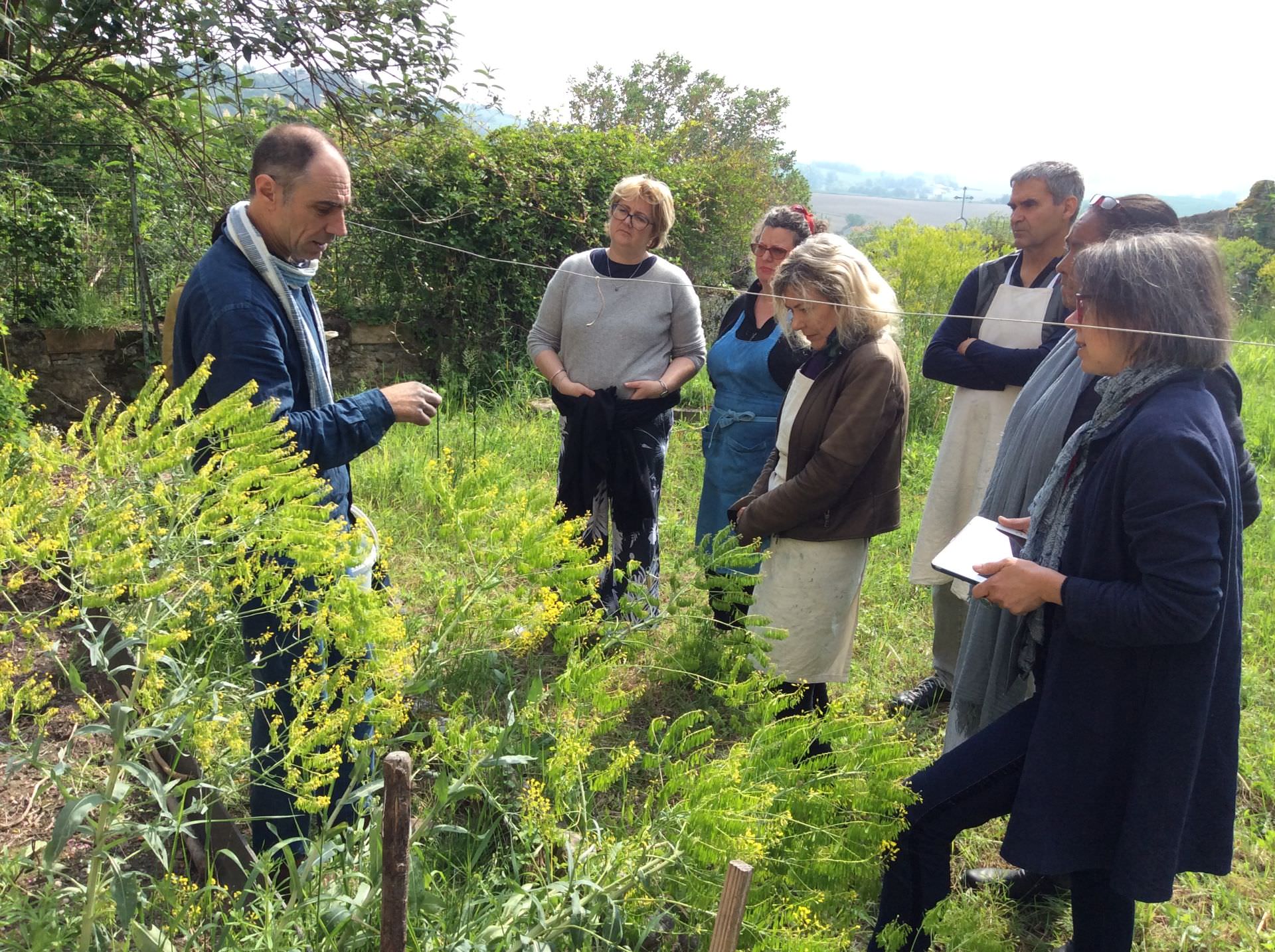
In Lautrec, in her studio where Françoise dyes with Pastel indigo, you can see vats used for slow reduction—a method that’s rarely used, requiring daily monitoring and meticulous care, but the blues produced are so deep and luminous!
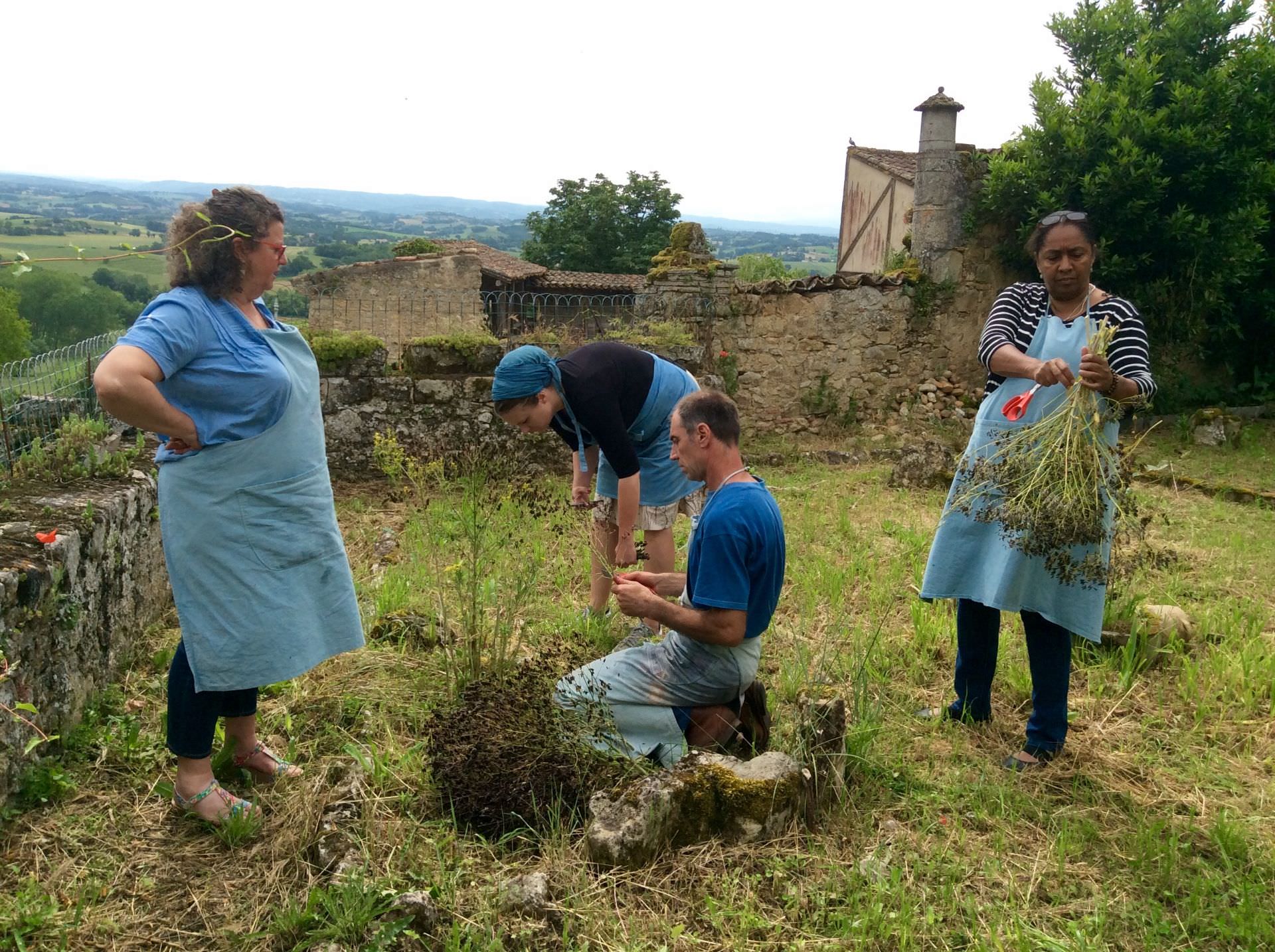
Pastel is back in Lautrec, with La Ferme au Village—it’s life in blue, in the heart of the Land of Plenty, the place where life is good, Cocagne is a ball made from Pastel leaves that have been crushed, fermented, shaped by hand, and then left to dry in a rack-style dryer.
During the Renaissance, this Cocagne was the source of our beautiful region’s wealth. In fact, the cultivation and trade of pastel were centered in the “golden triangle”—Toulouse, Albi, and Carcassonne—with “gold” referring to the color of its yellow flowers and the wealth it brought to the pastel merchants, who were said to be richer than kings. It is the blue reserved for the nobility.
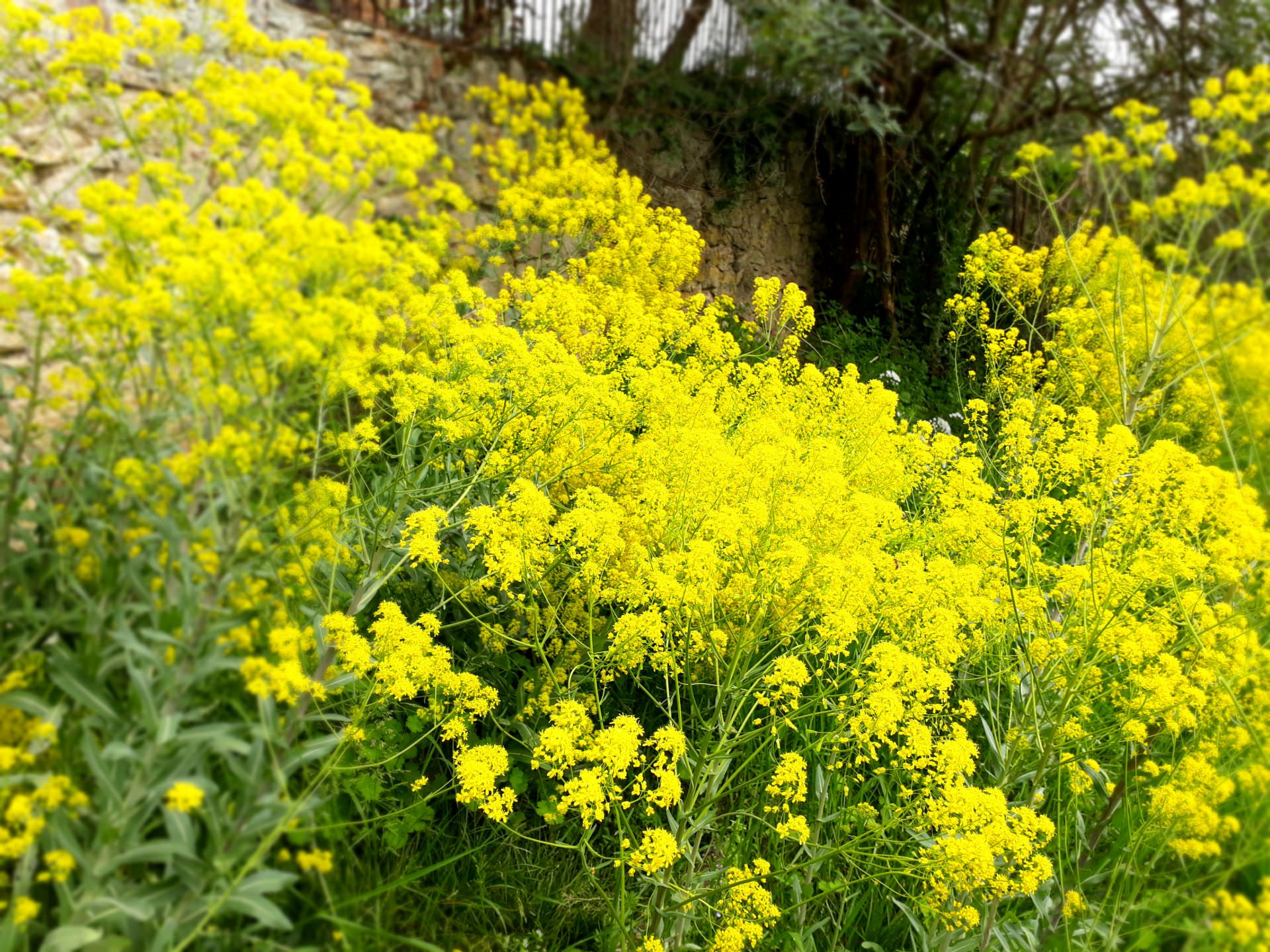
A magical and emblematic plant of the Land of Cocagne, the dyer’s woad (Isatis tinctoria), in ancient Greek, is the only European indigo plant, used for dyeing since the Neolithic period.
People began using woad with fresh leaves in the Middle Ages. It took an enormous amount of leaves to produce any color, and even then, the color was very pale.
Later, it was discovered that fermenting woad allowed the pigments to concentrate, yielding darker blues.
The widespread arrival of tropical indigo in the 16th century made it possible to enhance pastel vats and produce very dark blues, thereby simplifying the dyers’ work; from then on, Pastel and tropical indigo became inseparable; Pastel, essential for the reduction process, served as a catalyst to reduce tropical indigo.
Due to the Continental Blockade, tropical indigo could no longer enter the country, so Napoleon launched a Pastel indigo production program; two indigo mills were established in our region, in Albi and Toulouse. This indigo production was a first in France, but its low profitability meant that, once the embargo was lifted, the indigo factories were closed, and dyeing resumed using vats of pomegranate pastel reinforced with tropical indigo.
In the mid-19th century, sodium hydrosulfite—a chemical reducing agent—was discovered, rendering the labor-intensive “cocagne” process obsolete; it was only at this time, therefore, that pastel cultivation began to decline entirely.
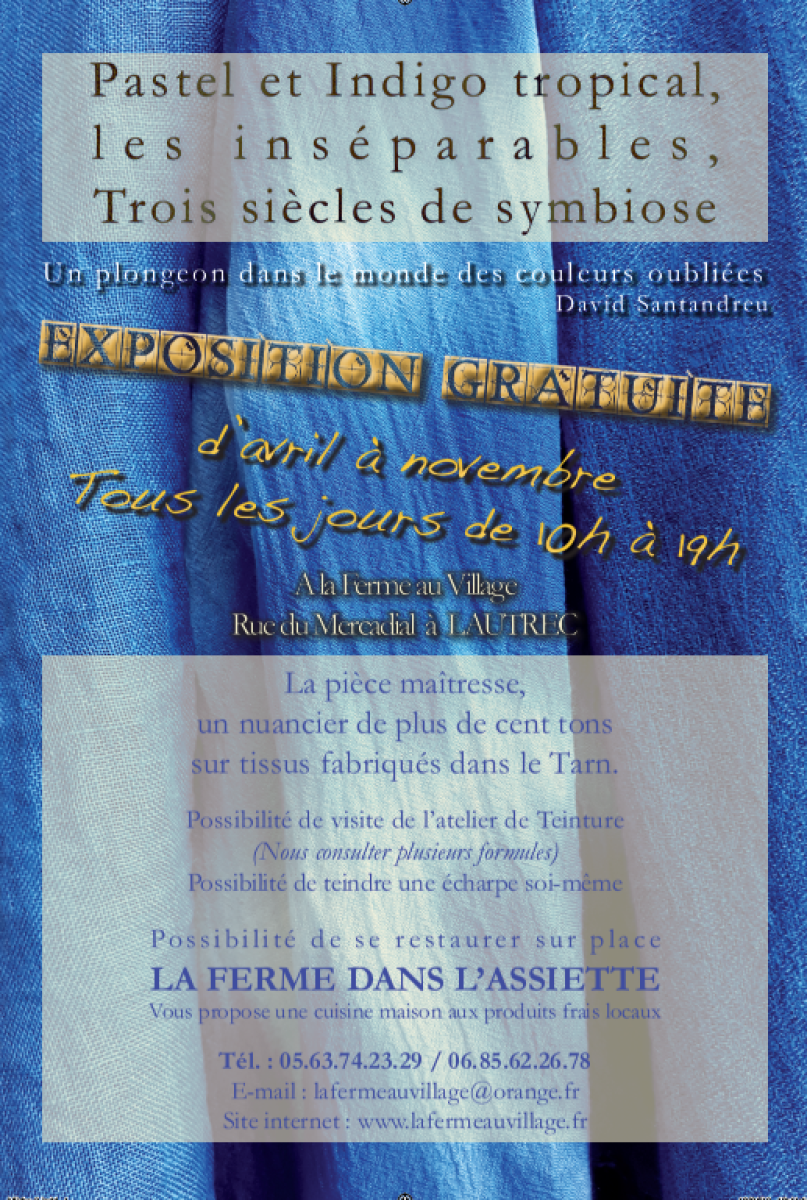
If you’d like to learn more, join us for a guided tour and lecture at our dye workshop in Lautrec.
Gesproken talen : Engels – Spaans – Frans
Betaalmethoden
- Cheque
- Bankkaart/creditcard
- Contanten
- Online betaling
Voordelen
Uitrusting
- Parkeerterrein in de buurt
Diensten
- Huisdieren toegestaan
- Online winkel
Allez-y en liO
En car : A moins de 10 mn à pied de l’arrêt LAUTREC – Village !
Cet arrêt est situé sur les lignes : CASTRES – LAVAUR
GAILLAC – CASTRES
Environ 2 min (243 m).
Calculez votre itinéraire pour votre voyage en Occitanie avec les trains ou les cars LiO
Calcul itinéraires et recherche horaires
Bon plan
Pass Occitanie Rail Tour
Choisissez le pass Occitanie Rail Tour et son tarif préférentiel pour voyager avec liO à travers la région.
www.occitanie-rail-tour.com
Groepen
- Maximaal aantal personen 20